
ExpressVPN has quietly evolved from a single-purpose VPN service into a full-fledged cyber security ecosystem, reflecting a fundamental shift in how privacy is understood in 2026.
For privacy-aware professionals, remote workers, and digital nomads, this transformation is critical: online safety or advanced protection is no longer a matter of installing individual tools but achieving end-to-end coverage across every digital interaction. While VPN connection has long been the first line of defense for masking IP address, encrypting personal information, and user data, it cannot address every vulnerability.
People still face risks from password breaches, SIM swaps, email tracking, and metadata leaks, often without realizing that fragmented tools can increase exposure rather than reduce it. ExpressVPN’s new direction acknowledges that privacy today is systemic, not single-point, and protection must account for the human behaviors that drive most digital exposures: reused passwords, exposed emails, AI prompt retention, and identity data leaking silently.
Why Fragmented Privacy Tools Fail Modern Users
A key misconception among digital professionals is the belief that more tools equal more safety. Research from the Electronic Frontier Foundation and cybersecurity studies repeatedly shows that isolated tools leave critical blind spots.
VPN services, for instance, conceal IP addresses but are vulnerable to browser fingerprinting, WebRTC leaks, and other tracking methods that can reveal device identity and location.
Password managers reduce credential reuse of user data but do not protect recovery emails or phone-based two-factor authentication, both common vectors for account hijacking. Similarly, email tracking pixels can quietly collect metadata about your reading habits, location, and device type, while SIM-based recovery channels remain an easy target for attackers.
The cumulative effect of these gaps is subtle but dangerous: users believe they are protected, but fragmented defenses leave attackers multiple pathways to compromise their accounts, devices, and identities.
A VPN, a password manager, and an encrypted messenger, each working in isolation, cannot prevent multi-step attack chains that exploit these blind spots.
Express VPN
Get the full Express VPN suite in one subscription
The Real-World Risks You Might Be Overlooking
Even well-informed users are exposed in ways they may not expect:
- IP visibility: Despite VPN protection, advanced browser fingerprinting and IPv6 leaks can still reveal geographic and device information.
- Password breaches: Reused or compromised credentials, coupled with unsecured recovery channels, make account hijacking easier than many realize.
- Email tracking: Hidden pixels in newsletters or work emails provide location and behavior data that VPN and password manager cannot block alone.
- Phone number exposure: Used for account recovery and SMS authentication, phone numbers are vulnerable to SIM swaps and metadata correlation.
- AI prompt retention: Convenience often trumps consent; prompts submitted to AI platforms may be stored and analyzed, exposing sensitive information. Read our Free AI Platform Analysis
- Identity theft: Often occurs long after data exposure, quietly compromising accounts and personal records without immediate detection.
- Multi-step hijacking: Attackers can chain these vulnerabilities; phishing a password, exploiting email recovery, and using device metadata to bypass multiple tools at once.
Scenario in Practice: A remote worker relies on a VPN and password manager but keeps Gmail as their recovery email. A tracking pixel in a business email identifies their IP behind the VPN. If a separate service leaks credentials, the attacker can reset other accounts using phone recovery. Despite using multiple privacy tools, the worker’s digital identity is compromised because the tools do not interlock. And, we are positive that no one has invested in ID theft insurance, right?
Another example: a digital nomad uses a VPN, an encrypted messenger, and a tracker-blocking browser extension. They download a malicious PDF via email that exploits system-level vulnerabilities. Even with multiple tools, malware can bypass isolated defenses because none were integrated to cover endpoint-level risks.
From Tools to Coverage: A Mental Shift
Alright, so the future of privacy is not about the number of apps, but about mapping every exposure point and closing gaps systematically.
You must audit all layers of your digital life; network, devices, accounts, email, messaging, and metadata, and understand how tools interact. Cognitive overload and fragmented defenses leave blind spots; integrated ecosystems reduce gaps and allow professionals to manage their digital footprint effectively.
Our research shows that you often overestimate safety by counting tools rather than assessing coverage. In 2026, a VPN alone or even a collection of isolated privacy apps is insufficient. Privacy needs to be visualized, mapped, and strategically defended, not treated as a checkbox exercise.
The industry trend is clear: privacy is no longer solved with a single app.
Proton VPN, for example, has expanded beyond its VPN into a full privacy ecosystem that includes encrypted email (Proton Mail), secure cloud storage (Proton Drive), authenticator (Proton Authenticator), and a password manager (Proton Pass). Each addresses different blind spots, from email metadata leaks to credential reuse, demonstrating that even well-known VPN providers recognize the need for systemic protection.
The takeaway for you is that a no logs policy VPN alone, like Proton VPN and Surfshark are a strong baseline for network privacy, but it cannot shield you from human-level vulnerabilities or multi-step attack chains without complementary tools.
The ExpressVPN Privacy Suite: Bridging the Gaps
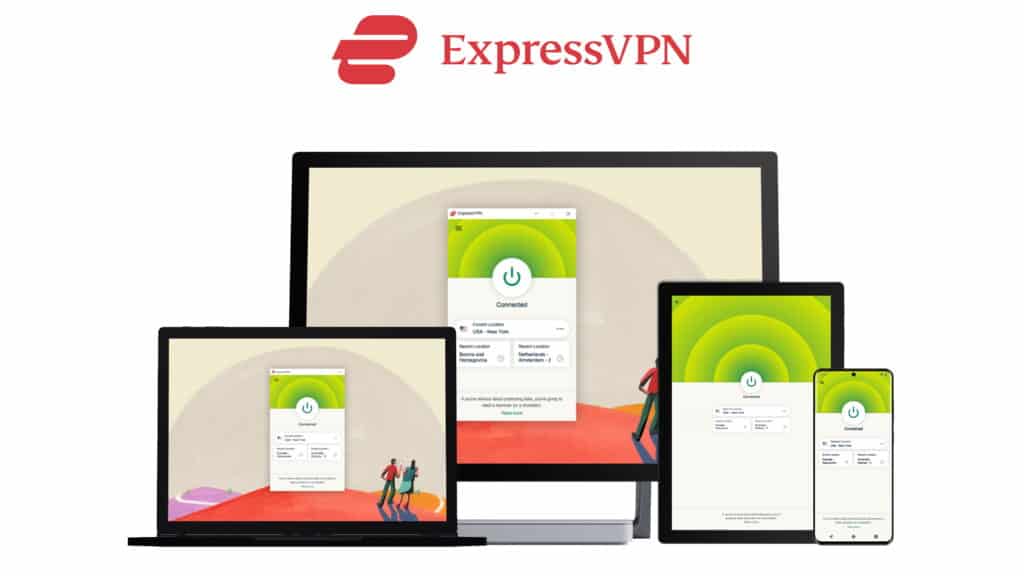
The ExpressVPN 5-in-1 Privacy Suite exemplifies cohesive coverage by aligning advanced protection tools with specific attack vectors:
- Express VPN:
ExpressVPN app continues to protect IP address, user data, and encrypt network traffic, reducing exposure on public Wi-Fi and preventing ISP or tracker surveillance. Advanced features now include protection against WebRTC leaks and IPv6 fingerprinting. - Express Keys: Password Manager
Generates strong, unique passwords, mitigates reuse risk, and closes gaps that leave accounts vulnerable to breaches, phishing attacks, and identity theft. Express Keys also monitors for previously leaked credentials and suggests secure replacements. Its zero-knowledge architecture ensures even Express VPN cannot access your credentials. - Encrypted Messaging: Confidential Computing
Secures both content and metadata, protecting sensitive conversations and personal information from interception. Ideal for professionals handling client data or confidential work remotely. - Express Mail Guard: Email Privacy
Blocks tracking pixels, prevents phishing campaigns, and protects metadata that fragmented email setups often leave exposed. Mail Guard also provides email aliasing and encrypted relay features, limiting exposure of primary addresses. - Endpoint Security (Express AI)
Covers malware attacks, SIM swaps, and system-level leaks that individual tools often miss, strengthening the overall defense ecosystem. Express AI adds a private, confidential computing layer to proactively scan for unusual system behavior, providing early warning against human-level errors and attack attempts. - Identity Defender (US-only)
Monitors for identity theft and alerts users when personal data is exposed or misused online, closing a human-level blind spot that most privacy setups ignore.
By combining these components, the ExpressVPN privacy suite moves users from a patchwork of security tools to a cohesive privacy framework, dramatically reducing the feasibility of multi-step attacks. Importantly, it delivers integration, simplicity, and human-aware protection, rather than just piling on tools.
Express VPN
Get the full ExpressVPN suite in one subscription
Conclusion: Why This Matters
The significance of this integrated approach goes beyond risk reduction.
For professionals navigating hybrid work, global travel, and increasingly sophisticated surveillance in 2026 and onwards, this suite demonstrates that privacy is continuous, multi-layered, and strategic, not just a matter of installing apps.
Auditing your own coverage, understanding the gaps, and implementing tools that interlock is the only way to move from illusory safety to real security. End-to-end privacy coverage isn’t just a buzzword; it’s the practical baseline for anyone serious about defending their digital identity.
If you want to, you can check 5+ Best VPN Services That Don’t Let You Down so you can pick another solution for VPN service.