
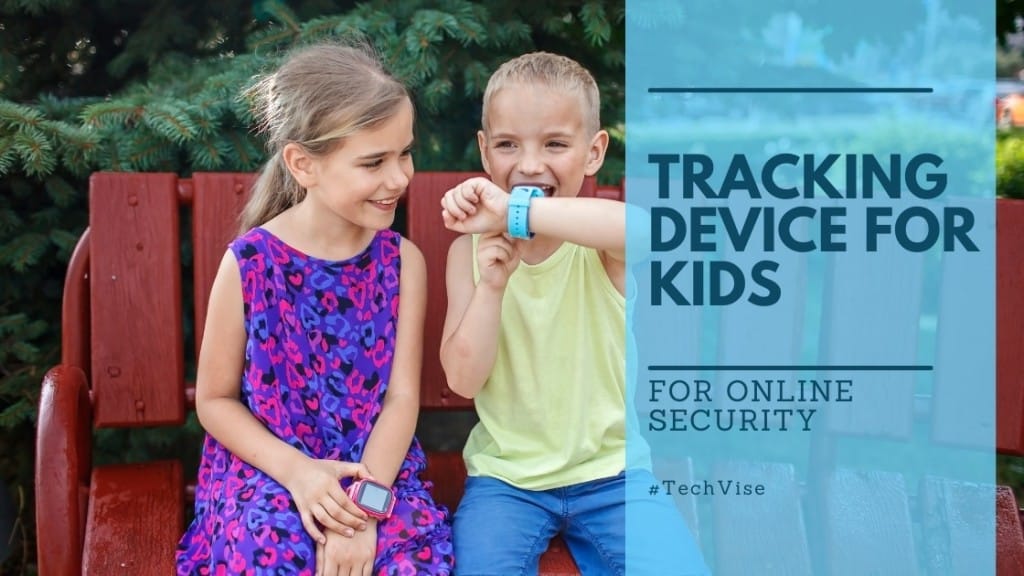
Keeping track of your kids used to be hard, but not anymore. With these great and simple tracking devices, you can keep an eye on them whether they are walking to school, at a friend’s house, on a school trip, or simply out of sight for longer than feels comfortable.
GPS tracking technology has matured considerably. A good GPS tracker for kids gives a parent real-time visibility into their child’s location, sends safe zone alerts when a child arrives or leaves a set area, and provides an SOS button the child can press in an emergency. Some devices go further, offering two-way calling, content monitoring, and parental controls over what a child can access on the device.
This guide covers the best GPS trackers and tracking devices for kids available in 2026, from compact clip-on trackers to full smartwatches. All devices have been reviewed for accuracy, features, and honest limitations. If you want app-based tracking without dedicated hardware, our companion guide to the
This guide covers the best GPS trackers and tracking devices for kids available in 2026, from compact clip-on trackers to full smartwatches. All devices have been reviewed for accuracy, features, and honest limitations. If you want app-based location tracking without dedicated hardware, our guide to the best family tracking apps covers that ground.
What to Look for in a GPS Tracker for Kids
- Real-time GPS tracking: The tracker should update your child’s location frequently. Look for GPS tracking devices that update every 60 seconds or less. In a genuine emergency, a stale location reading is not useful. The best GPS tracker options update every few seconds in active tracking mode.
- Geofencing and safe zone alerts: A safe zone alert notifies the parent the moment a child enters or leaves a defined area such as home or school. This is one of the most used features in any child GPS tracker, and the speed of the alert matters as much as its accuracy.
- SOS button: A one-tap emergency alert that sends the child’s precise location immediately. Essential for any tracking device for kids. Some devices also allow the SOS button to call emergency services directly.
- Battery life: Younger children and older kids alike forget to charge devices. A GPS tracker with a longer battery reduces the chance of losing visibility at the worst moment.
- Durability and water resistance: Children are active. Any tracking device worth recommending should withstand drops, rain, and rough use. Look for at minimum an IP67 rating for water resistance.
- Subscription requirements: Most GPS tracking devices require a monthly data plan to function. Bluetooth trackers do not, but their range is limited and they cannot send location data independently. Factor ongoing subscription cost into any purchase decision.
- Parental controls and app quality: The parent-facing app is where you manage everything. A good app is intuitive, provides clear location history, allows easy geofencing setup, and delivers alerts reliably. Parental controls on the device itself, such as approved contact lists and screen time management, are a bonus on smartwatch models.
- Bluetooth vs cellular GPS: Bluetooth trackers like Apple AirTag have no monthly fee but rely on nearby devices to report location and have no independent GPS signal. Cellular GPS trackers use their own SIM and network connection to report location from anywhere. For child safety tracking, cellular GPS is the right choice.
A note on other devices: the Apple Watch SE and Apple Watch Series are capable GPS wearables but require a full iPhone pairing and do not include the child-specific safety features found in dedicated kids GPS watches. The Gabb Watch 3e, Gizmo Watch, and Lil Tracker also come up in searches for kids tracking devices; all are functional options though they fall short of the best GPS tracker choices on this list in terms of location accuracy, parental controls, or global coverage. Jiobit Smart Tag was a popular screenless child GPS tracker but has been discontinued and is no longer available. Bluetooth trackers like AirTag and Tile are useful for bags and belongings but are not designed for child safety tracking.
Best GPS Tracking Devices for Kids
AngelSense GPS Tracker
AngelSense is the best GPS tracker for children with special needs including autism, Down syndrome, and other conditions that increase the risk of wandering or make communication difficult. It combines real-time GPS tracking with features specifically designed for children and adults who may not be able to respond to a parent calling. If your child also uses AI-based apps and you are concerned about their digital safety alongside physical safety, our guide to parental control apps for AI chatbots covers that specific risk.
The AngelSense GPS tracker provides location updates every 10 seconds in emergency mode, and every 30 seconds when a child is in transit. AI learns the child’s typical routine and alerts parents when unusual activity is detected, such as an unexpected departure from school or arrival at an unrecognised location. In emergency mode, parents can share a live tracking link directly with law enforcement, school staff, or family members, giving everyone searching for the child a real-time view.
The auto-pickup speakerphone allows a parent to call the device and have it answer automatically, meaning the child does not need to interact with it for the parent to hear what is happening. The audio drop-in feature lets parents listen to the surrounding environment at any time. The SOS button sends an immediate alert with location data. AngelSense is designed with sensory sensitivities in mind, offering multiple wearing options including magnetic pins, undershirt attachments, cut-to-fit belt clips, lanyards, and wristbands so children who struggle with wearables have alternatives. The device is IPX7 water resistant.
AngelSense works in the US, UK, and Canada. A monthly subscription is required, with plans varying by feature tier. The device itself is currently offered free for first-time purchasers under a promotional scheme, subject to a subscription commitment. A 30-day trial period is available.
Note: AngelSense’s monthly subscription is among the higher-priced options on this list. The feature set justifies it for families with children at elevated elopement risk, but it may be more than most parents need for general everyday tracking.
If you cannot access this site, try using a VPN.
Bark Watch
The Bark Watch is the pick for children who are ready for a smartwatch and need content safety as well as location. It’s the only device in this list that does both in one wearable.
What it is
The watch is built on the Samsung Galaxy Watch8, with a round face and an aluminium case. Its water and dust ratings suit swimming and everyday knocks.
Content monitoring
Bark scans the watch’s texts, photos and videos for signs of cyberbullying, predatory contact and explicit content. You get an alert only when something needs your attention, so you are not reading every message.
Location
Through the Bark parent app you can check where your child is right now, see their location history and set safe zone alerts for places like school and home. Independent testing ranks its GPS accuracy among the best wearable child trackers.
Safety and staying in touch
There is an SOS button, and fall detection can contact emergency services. Calls and group texts are limited to contacts you approve.
What it leaves out
No games, no internet, no camera and no video calls. A health app tracks steps, heart rate and activity, and the watch comes in several band styles.
What it costs
- The watch: $288 upfront. Bark used to spread this across monthly payments, and now sells the watch as a one off purchase. Affirm and Klarna are available at checkout.
- The service plan: $15 a month. It covers cell service, parental controls and a Bark app subscription for the whole family. That subscription also covers monitoring on other devices at home.
Over a year, that is about $468 in total.
Limits to know
The watch runs on Bark’s own cellular network and ships in the US only. Its GPS doesn’t update every few seconds like a dedicated tracker. Think of it as a smartwatch with strong location awareness rather than a precision tracker.
Tracki GPS Tracker
The Tracki GPS Tracker is the best GPS tracker for parents who want a discreet, screenless device that goes anywhere a child goes without requiring them to wear anything. It is one of the most widely deployed child GPS device available, with over 41,000 verified Amazon reviews and coverage across approximately 190 countries, making it one of the strongest options for families who travel internationally.
The 2025 model uses 4G LTE with 3G and 2G fallback, a built-in international SIM card, and a combination of GPS satellites outdoors and Wi-Fi positioning indoors for consistent location accuracy across environments. Battery life is up to 5 days with real-time tracking active, or up to 75 days with reduced tracking frequency. An optional extended battery accessory extends life considerably further.
The device weighs just over an ounce and includes a lanyard, belt clip, and magnetic case, making it easy to attach to a backpack, school bag, or clothing. Features include custom safe zone alerts with geofencing, an SOS button, speed alerts, Google Street View integration, and up to 5 years of location history. A lifetime warranty is included.
A monthly subscription is required. Plans are available on monthly, six-month, and annual terms, with longer prepaid plans offering meaningful cost savings. The device is available via the Tracki website and major online retailers.
If you cannot access this site, try using a VPN.
Spy Tec Portable GPS Tracker
The Spy Tec Portable GPS Tracker is a discreet tracking device for kids that prioritises battery life and covert placement. A parent can slip this device into a child’s bag, jacket pocket, or luggage without the child needing to interact with it at all. Battery life extends up to two weeks on a single charge, which is among the longest available for a portable GPS tracking device at this size.
Real time tracking updates are accessible via the Spy Tec smartphone app on both Android and iOS devices, with full Google Maps integration. Features include custom geofencing with safe zone alerts, an SOS button, speed alerts, route history playback, and a lifetime warranty. A subscription plan is required for real time GPS tracking.
Note: The Spy Tec tracker is designed for discreet placement rather than wearable use. It works best in bags and luggage rather than as a wearable tracking device for everyday child use.
Greenlight Safe Kids
GreenlightSafe Kids is a newly launched screen-free GPS tracking device from Greenlight, a company with a strong reputation in family fintech. Launched in March 2026, it is designed as a simple standalone tracking device that requires no phone on the child’s end. Parents track their child’s location through the Greenlight app on their own smartphone. Coverage works in over 120 countries via a built-in SIM card and flexible monthly subscription.
The headline feature is battery life: up to 30 days on a single charge, which is among the longest of any compact GPS tracker for kids on this list. Features include real-time GPS tracking, safe zone alerts, a one-tap SOS button with immediate location notification to parents, and location history. The device is compact and designed to be carried rather than worn, though it can be attached to a bag or clothing.
Note: Greenlight Safe Kids launched in March 2026. Long-term independent testing is still limited. Some early user reports flag GPS location accuracy delays. Test the device thoroughly during any available trial period before committing to a long-term plan.
SpaceTalk Adventurer 2
The SpaceTalk Adventurer 2 is a 4G kids GPS smartwatch designed for children aged 5 to 12 who need a first communication device with built-in location tracking. It is the current model from SpaceTalk, the best-selling kids smartwatch in Australia, and builds on its predecessor with a lighter design, improved health monitoring, and the updated Spacetalk Platform. A pre-installed SIM card is included and a Spacetalk Mobile plan is required.
Real-time GPS tracking is managed through the Spacetalk parent app, which shows the child’s location on a live map, supports geofencing with safe zone alerts, and maintains 30 days of location history. The app also includes a Navigate To feature that routes parents directly to their child’s location without needing an address. The watch supports 4G video calling, voice calls, secure encrypted chat, and SMS, all restricted to a parent-approved contact list. No social media, no internet browser, no access from unknown contacts.
Additional features include school mode that disables non-essential features and notifications during school hours, heart rate monitoring and step counter for activity tracking, wear detection that alerts parents if the watch is removed from the child’s wrist, and a 5MP camera. The display uses Gorilla Glass and the device carries an IP67 splash resistance rating. The device requires daily charging.
Note: The Freedom Platform software launched with some stability issues in late 2025 that SpaceTalk is actively resolving. Check current reviews before purchasing. Available in Australia, UK, and USA with plan requirements varying by region.
Cosmo JrTrack 5 SE
The Cosmo JrTrack 5 SE is a kids smartwatch for children aged 6 to 12 who are not ready for a smartphone. It has its own phone number and mobile connection, so your child does not need a phone. You manage everything from the Cosmo app on your own iPhone or Android phone. The 5 SE uses the same hardware as the JrTrack 5, with Cosmo’s rebuilt parent app.
Location runs on Cosmo’s HaloGPS. When you switch on Active Tracking, your child’s location refreshes every 10 to 15 seconds, so you can follow them as they move. You can draw SafeZones around home, school or a relative’s house and get an alert when your child arrives or leaves. You can also look back over their location history. In an emergency, your child double taps the power button to alert their main contact. Calling 911 is off by default, and you can switch it on when you feel they are ready.
Only contacts you approve can call or message the watch, and unknown numbers are blocked. Your child can send texts, photos, short videos and voice notes, or speak a message for the watch to type. You can read their message history in the app. There is no internet browser and no social media. You choose any extra apps, such as Spotify Kids or Calm, from Cosmo’s App Station and set a daily time limit for each one. School-Fi puts the watch into a quieter mode automatically when your child is on campus.
One detail sets the 5 SE apart from most watches on this list: it doubles as a clip. On days your child will not wear it, or when a school has an away-for-the-day phone policy, the watch can clip to a backpack instead.
Cosmo rates the battery at 18 to 24 hours, so plan on charging it every night. The watch is IP68 rated to 1.5 metres, but Cosmo advises taking it off for swimming and bathing. It has a front camera for photos and videos but does not support video calling.
The 5 SE works only on Cosmo Mobile, which roams across major networks including AT&T and US Cellular. You cannot use your own SIM or add it to another carrier’s plan. Calling works in the US, Canada and Mexico. A Cosmo membership and a one time activation fee are required, and prepaid plans cost less per month than paying monthly. Cosmo offers a 30 day money back guarantee and a three year warranty.
Cosmo’s newer JrTrack Pro is available to pre-order now, with delivery expected for the holiday season. It is slimmer, at about 12.8mm, with a larger OLED screen and a 5MP camera. Cosmo says Active Tracking refreshes every 5 to 10 seconds, and the SOS goes to every guardian on the account with a long press of an orange button. Cosmo’s early lab testing puts the battery at up to 48 hours, but it marks this figure as one to be confirmed before launch. We will review the Pro once it is shipping.
Note: JrTrack 5 SE works only on Cosmo Mobile and is limited to North America. It has no removal alert and no automatic answering, so for a child who bolts, AngelSense remains the stronger choice.
Garmin Bounce 2
The Garmin Bounce 2 is the best GPS tracker for kids when GPS accuracy is the top priority. Garmin has over 30 years of GPS technology expertise, and it shows. Independent testing consistently places the Bounce 2 among the most accurate GPS tracking devices for kids available in any form factor, outperforming most competing smartwatches on location precision and safe zone alert speed. If knowing exactly where your child is at any given moment is the primary requirement, the Garmin Bounce 2 is the right device.
The Bounce 2 is a 4G LTE kids smartwatch designed for children aged 6 to 12. Real-time GPS tracking, safe zone alerts with LiveTrack location sharing, and parent-controlled communication are the core features. When a child activates the assistance feature, the watch calls parent-approved contacts and simultaneously sends a live location sharing link so anyone searching for the child can see their real-time position on a map. Communication is handled through preset messages, custom text messages, and voice messages of up to around 20 seconds. Parents control all contacts through the Garmin Jr. app, which also manages safe zones, chores and rewards, activity goals, and parental controls. Up to 20 contacts can be approved.
Activity tracking is a genuine strength alongside GPS. The Bounce 2 tracks steps, sleep, swimming including lap counts and stroke data, running, walking, and cycling with GPS route recording. Toe-to-Toe step challenges let children compete in real-time with nearby Garmin Bounce users. The chores and rewards system lets parents assign tasks and set star-based rewards, which children can claim through the app. The device is swim-friendly and built to Garmin’s typical durability standards.
Battery life is approximately two days with LTE active, requiring every-other-day charging. A subscription plan is required for LTE features. The device is not the smallest kids smartwatch on this list, sitting larger than the JrTrack 5 or SpaceTalk Adventurer 2, which is worth factoring in for younger children or smaller wrists. No video calling is available. An active LTE subscription and coverage are required for location tracking and communication features.
Note: The Garmin Vivofit Jr. 3, the lower-tier Garmin kids product, is a Bluetooth-only fitness tracker with a one-year battery. It does not include GPS tracking or calling and is not a tracking device for safety purposes in the same sense as the Bounce 2.
If you cannot access this site, try using a VPN.
LandAirSea 54 GPS Tracker
The LandAirSea 54 is a compact magnetic GPS tracking device made in the USA by a company with over 25 years in the GPS tracking industry. It is not a wearable, but it is one of the most practical tracking devices for children who carry backpacks, school bags, or travel luggage. A parent can attach it magnetically to any metal surface or place it inside a bag, and it begins reporting immediately.
Real-time GPS tracking updates as fast as every three seconds on higher-tier plans, with geofencing, location history for up to one year, speed alerts, and full Google Maps integration through the SilverCloud smartphone app. GPS accuracy is typically within six feet under open sky. The device is IP67 waterproof, includes a built-in rechargeable battery lasting up to two weeks with average use, and carries a lifetime warranty. It works in over 155 countries, making it one of the strongest options for families who travel frequently. A monthly subscription is required and the device ships with an activated SIM card.
Gabb Watch 3e
The Gabb Watch 3e is the recipient of Best Overall Kids Smartwatch for the second consecutive year in the SafeWise Kids Safety Awards. That is a meaningful endorsement from one of the more rigorous independent testing publications in this space.
The Gabb Watch 3e is a 4G LTE kids smartwatch designed as a safe first device for children who are not yet ready for a smartphone. It has its own phone number, connects only to parent-approved contacts, and blocks all social media, internet access, and app downloads from the start. GPS tracking updates every 15 minutes by default, with on-demand real-time location checks available through the MyGabb parent app on iOS and Android. Parents can set Safe Zones and receive alerts if a child leaves a predefined area.
The MyGabb app lets parents approve contacts, monitor text messages, track location, receive SOS alerts, schedule Focus Time for school hours, and create Safe Zones. The watch supports up to 100 parent-approved contacts, voice calling, text dictation, speech-to-text, emojis, and a calculator. A virtual pet and chore app called Gabb Go encourage activity and responsibility without screen addiction. The display uses Gorilla Glass and the device is IP68 rated.
Battery life is approximately 14 to 18 hours. No camera, no video calling, no Wi-Fi fallback. The watch runs on Gabb’s own network and is available only within the United States including Alaska and Hawaii, with no international or roaming service. A monthly plan and one-time activation fee are required.
Final Word
The best GPS tracker for kids depends on your child’s age, daily routine, and what level of visibility gives you genuine peace of mind. For younger children who do not yet carry a phone, a compact GPS tracking device like the Tracki GPS Tracker or LandAirSea 54 slips into their bag and reports location independently. For children ready for their first communication device, the JrTrack 5 and SpaceTalk Adventurer 2 combine GPS tracking with parent-controlled calling and messaging. For parents who want digital content safety alongside location tracking, the Bark Watch is the only device that covers both in one wearable. For children with special needs and higher elopement risk, AngelSense GPS Tracker remains the strongest dedicated option available.
Whatever GPS tracking device you choose, pair it with an honest conversation with your child about why it is there. Children who understand the reason for monitoring are more likely to keep the device charged and on their person. For broader digital safety across social media, messaging, and AI platforms, our guide to best parental control apps for children covers the software layer that complements any hardware tracking solution.